
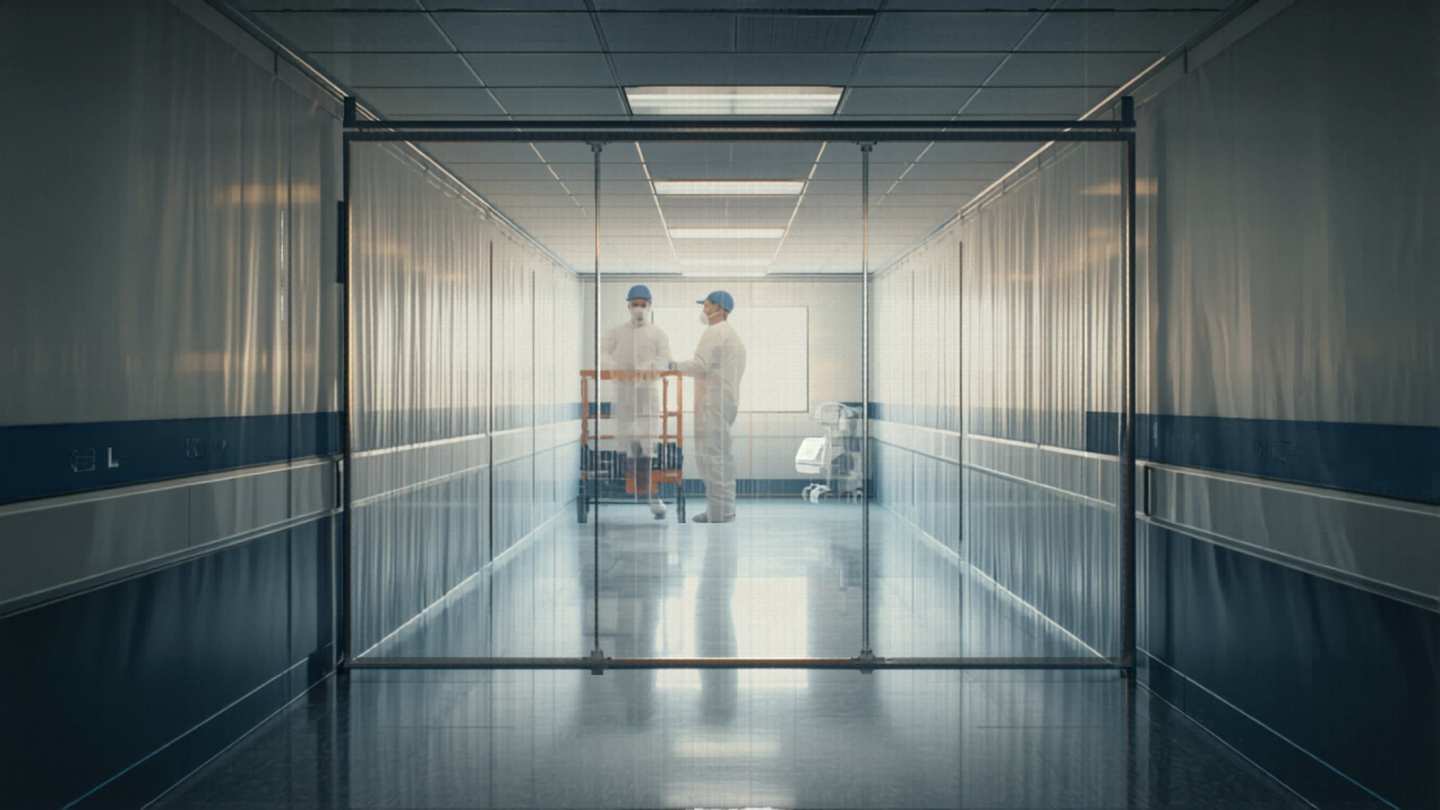
Healthcare Renovations
ICRA-certified commercial construction for occupied hospitals, medical offices, and surgery centers.
Building Around Patient Care
Healthcare construction requires a level of precision, hygiene, and risk-mitigation that typical commercial contractors cannot provide. When lives are on the line on the other side of a partition wall, you need a specialized healthcare renovation contractor.
- Infection Control: Deploying negative air machines, HEPA filtration, and rigid anterooms to ensure zero dust escapes into active patient wings.
- Specialized MEP Integration: Installing medical gas lines, specialized HVAC returns, and robust power systems required for life-saving equipment.
- Behavioral Health Standards: Expert installation of anti-ligature fixtures and impact-resistant materials designed for safety.
Medical Offices
Efficient tenant buildouts for private practices, urgent care clinics, and specialty ambulatory centers.
ICRA Certified
Our teams are heavily trained in Infection Control Risk Assessment protocols.
Zero Disruption Planning
We orchestrate massive utility tie-ins and structural modifications during off-hours to keep your surgical schedules functional.
Proven on a live ICRA project
For UC Health, RCG delivered a dual-suite physicians' office buildout inside an occupied medical facility — selective demolition, MEP rough-in, and active infection-control containment — with both suites turned over turnkey, on schedule.
See the UC West Chester ICRA case study →What ICRA Class Does Your Project Need?
ICRA (Infection Control Risk Assessment) matches containment rigor to patient risk. In practice:
- Class I–II — non-invasive or small-scale work in low-risk areas: dust control, work-area isolation, immediate cleanup.
- Class III — significant work in or near patient-care areas: rigid barriers, negative air pressure with HEPA filtration, sealed penetrations, controlled entry.
- Class IV — major work near high-risk populations (surgery, oncology, ICU): full anteroom protocols, continuous pressure monitoring, ILSM (Interim Life Safety Measures) coordination, and infection-control sign-off at every phase gate.
Your infection-control committee sets the class; our job is to price it honestly and execute it without shortcuts. If a contractor's bid doesn't state the ICRA class and its containment scope as line items, the bid is incomplete — that's the first thing your ICP will ask for.
Our Process, Built Around Care Delivery
- Pre-planning with your infection-control and facilities teams. ICRA classification, ILSM plan, phasing map, and after-hours schedule agreed before mobilization — in writing, in your committee's format.
- Containment first. Barriers built, negative air established and verified, pathways protected — before demolition starts, not after the first complaint.
- Phased execution. Utility tie-ins and high-impact work in planned off-hours windows; daily pressure checks logged; adjacent practices coordinated continuously so schedules hold on both sides of the wall.
- Verified turnover. Terminal clean, inspection with your ICP, punch, C of O — and a 3D tour of the finished space for your records and your leadership.
More UC Health case studies
Two more projects for UC Health: a Facial Plastics procedure suite at the Midtown campus, rebuilt during normal business hours inside a working medical office building, and a physician practice suite in West Chester re-planned in place — check-in rebuilt at the entry, an exam room added and work rooms rebuilt around the team.
Healthcare Renovation FAQs
Ready to Build Something That Lasts?
Whether it's a healthcare renovation, professional facility upgrade, or commercial buildout, we're here to deliver exceptional results with minimal disruption. Let's talk about your project.